
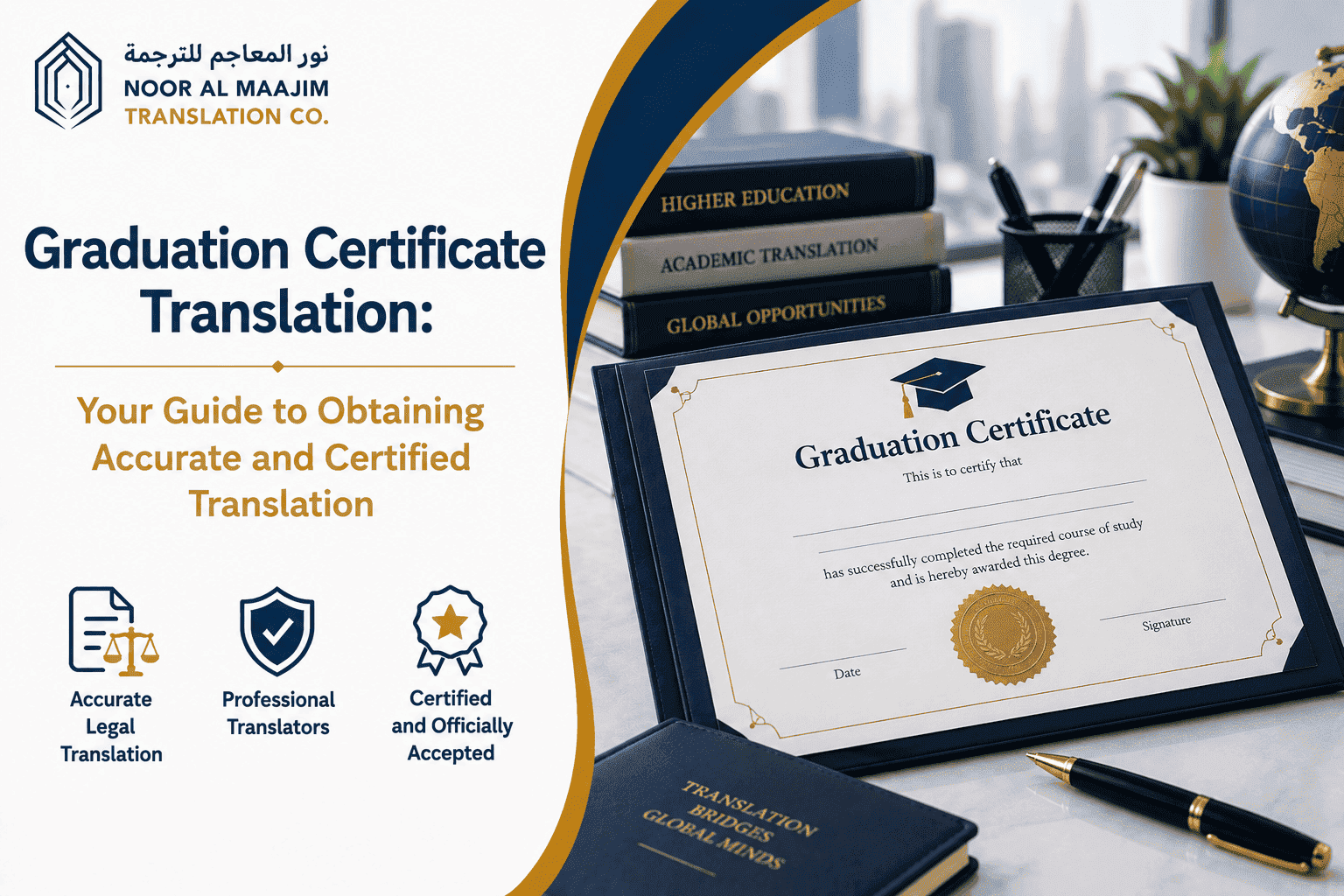
Did you know that a simple error in stating your major or graduation date in a translation could cost you a place at an international university? For students and graduates pursuing education or employment abroad, graduation certificate translation is one of the most important steps that can determine the outcome of an application. In this comprehensive guide, we explain everything you need to know about this service and how to ensure your documents are accepted the first time.
What Is Graduation Certificate Translation?
Graduation certificate translation is a specialized process designed to transfer the content of academic certificates from one language to another while maintaining accuracy in educational terminology, grades, and dates. This service is not simply about converting text; it requires an understanding of different education systems and how academic qualifications are presented in other countries.What Is the Difference Between Graduation Certificate Translation and General Translation?
Graduation certificate translation differs from general translation because it deals with precise academic terminology, including names of majors, courses, grading systems such as GPA, and academic titles. Any error in these terms could result in the receiving organization misunderstanding your qualifications.What Types of Certificates Are Included in the Translation Service?
Graduation certificate translation can cover different academic levels, including:- High school certificates.
- Bachelor’s degrees.
- Master’s degrees.
- Doctoral degrees.
- Fellowship certificates.
- Professional diplomas.
Why Do You Need Certified Graduation Certificate Translation?
Certified graduation certificate translation is an important requirement for students and graduates who plan to study, work, or complete official procedures outside their home countries. Its importance can be seen in several key areas:Official Recognition of Qualifications
Some universities, government authorities, and embassies require certified translations of academic certificates and may not accept ordinary translations. Therefore, it is important to verify the requirements of the receiving organization before submitting your documents.Ensuring Academic Accuracy
A specialized translator helps accurately convey the names of majors, courses, grades, and academic terminology, ensuring that the translation correctly reflects the qualifications stated on the original certificate.Avoiding Delays in Procedures
Errors in graduation certificate translation may result in requests to correct or retranslate documents, potentially delaying admission, employment, or credential evaluation procedures.Documenting the Translation and Protecting Rights
A certified translation generally includes a declaration confirming the accuracy of the translation, along with the translation office’s stamp or the certified translator’s signature, according to the requirements of the receiving organization. This helps clarify the translator’s responsibility for the translated content.Meeting Credential Evaluation Requirements
Some credential evaluation organizations, such as WES (World Education Services), require academic documents to be translated according to specific guidelines. Therefore, you should review the organization’s instructions before arranging the translation.When Is Graduation Certificate Translation Required?
The need for graduation certificate translation arises in many academic and professional procedures, including:Applying for Graduate Studies
Foreign universities may require certified translations of bachelor’s degrees and transcripts to verify an applicant’s academic qualifications.Applying for Scholarships
Some international scholarships require translated academic certificates as part of the application documents, depending on the requirements of each program.Applying for a Student Visa
Embassies or relevant authorities may require translated academic certificates as proof of educational qualifications, depending on visa requirements.Looking for Employment Abroad
Some international companies require translated certificates to verify applicants’ academic qualifications and educational backgrounds.Credential Evaluation
Authorities responsible for evaluating academic qualifications in some countries may require translated certificates and transcripts as part of the credential evaluation process.Applying for Professional Licenses
Certain professions, such as medicine, engineering, and accounting, may require translated academic certificates as part of the requirements for obtaining a professional license, depending on the relevant authority.Learn More: Seamless Employment Contract TranslationWhat Documents Are Related to Graduation Certificate Translation?
Graduation certificate translation is not limited to the certificate itself. It can also include various related academic documents that universities, government authorities, or employers may request. The most important include:Transcripts
A detailed document listing the courses you completed and the grades you received. It is one of the most important documents required when applying to universities or undergoing credential evaluation.Graduation Certificates (Diplomas / Degree Certificates)
The official document proving that you have completed a specific academic program. It typically includes the university name, major, graduation date, and overall grade or classification.High School Certificates
These may be required for students seeking admission to universities or educational programs abroad, depending on the requirements of the educational institution.Diploma Certificates
These include professional, technical, and vocational diplomas and require accurate translation of the qualification title, specialization, and awarding institution.Doctoral and Fellowship Certificates
These certificates require particular attention to academic and specialized terminology because of the nature of the scientific and professional programs they represent.Academic Recommendation Letters
Some universities may require certified translations of recommendation letters issued by professors or academic supervisors.Academic Experience Certificates
These include training certificates, specialized courses, and other documents demonstrating relevant educational experience or qualifications.The Importance of Accuracy When Translating Graduation Certificates and Academic Documents
Accuracy is one of the most important factors affecting the acceptance of graduation certificate translations and academic documents. These documents contain official information that must be transferred clearly without changing its meaning. Key areas requiring particular attention include:Academic Major Names
Major names should be translated using appropriate academic terminology while distinguishing between similar disciplines. For example, Software Engineering differs from Computer Engineering, and one should not be used in place of the other.Grading System (GPA)
Grading systems vary between educational institutions and countries. Therefore, grades and classifications should be translated exactly as stated in the original document and should not be converted into another grading system unless specifically requested by the receiving organization.Dates
Dates may include the graduation date, enrollment date, and other dates stated on the certificate. They must be transferred accurately while taking into account the standard date format used in the target language.University and Educational Institution Names
University and educational institution names must be written accurately, using their official recognized names or retaining the original name and adding an appropriate translation when necessary.Stamps and Signatures
Certificates may contain stamps, signatures, or official statements that require translation while preserving their meaning and, where relevant, their placement within the document.Academic Courses
When translating transcripts, course names must be translated accurately to reflect their academic content while avoiding generic terms that could alter their intended meaning.Does Graduation Certificate Translation Vary Depending on the Receiving Organization?
Yes. Graduation certificate translation requirements may vary depending on the receiving organization and the country where the documents will be submitted. Therefore, it is important to understand the organization’s requirements before starting the translation.Universities
Some universities require certified translations of graduation certificates and transcripts and may also require notarization or additional documents depending on their admission procedures.Credential Evaluation Agencies (WES, ECE, and Others)
Credential evaluation agencies may require accurate and certified translations of academic certificates in accordance with their specific document submission guidelines.Embassies and Consulates
Embassies and consulates may require certified translations of certificates, along with document legalization or authentication according to visa requirements or the requirements of the relevant authority.Ministries of Education
They may require certified translations of certificates and transcripts as part of academic credential evaluation and equivalency procedures.Employers
Some employers may accept certified translations, while others may require additional authentication to verify academic qualifications.Government Authorities
Translation and authentication requirements vary from one government authority to another. Therefore, the required procedures should be confirmed before submitting documents.What Are the Most Requested Languages for Graduation Certificate Translation?
The languages required vary depending on the country, university, and receiving organization. Some of the most commonly requested languages for graduation certificate translation include:English
English is one of the most requested languages, particularly when applying to universities in the United States, the United Kingdom, Australia, and Canada.French
French translation is commonly required when applying to certain universities in France and Canada, particularly in Quebec, as well as in some African countries.German
German is used for translating certificates submitted to universities and educational institutions in Germany, Austria, and Switzerland.Turkish
Turkish translation may be required for students planning to study in Türkiye, depending on the program language and the receiving institution.Chinese
Demand for Chinese translation is increasing as the range of educational programs and scholarships available in China continues to expand.Italian and Spanish
Italian and Spanish are used when applying to educational institutions in Italy, Spain, and some Latin American countries.Urdu
Urdu translation may be required by students from Pakistan or those seeking admission to certain educational institutions that use Urdu.Graduation Certificate Translation into More Than 50 Languages
Noor Al Maajim Certified Translation provides graduation certificate translation services in more than 50 languages, helping meet the needs of students and graduates who plan to study or work outside their home countries.Do Graduation Certificates Need Official Certification?
In many cases, yes. However, certification requirements vary depending on the receiving organization and the country where the documents will be submitted. Therefore, you should confirm the type of translation and authentication required before submitting your documents.Certified Translation
A certified translation is accompanied by a declaration or certificate from the translator or translation office confirming the accuracy and completeness of the translation, in accordance with the requirements of the receiving organization.Notarized Translation
A notarized translation may involve notarizing the translator’s or translation office’s signature before a notary public. This may be required in certain cases depending on the receiving organization.Consular Legalization or Apostille
Some documents may require additional authentication when they are used in another country, depending on the applicable international agreements and procedures between the countries concerned.Ministry of Foreign Affairs Attestation
Some countries may require the original document or its translation to be authenticated by the Ministry of Foreign Affairs before it is submitted to the relevant authority.Translation Requirements in Kuwait and Saudi Arabia
Official requirements in Kuwait and Saudi Arabia vary depending on the type of document and the receiving organization. Therefore, it is recommended to confirm that the translation office is accepted and determine the required type of authentication before starting the process.Graduation Certificate Translation Steps from Start to Finish
Graduation certificate translation at specialized translation offices typically follows an organized process designed to ensure document accuracy and proper formatting.Stage One: Certificate Assessment
The original certificate is reviewed to determine its type, the target language, and the specific requirements of the organization to which it will be submitted.Stage Two: Translation
A translator specialized in academic translation accurately transfers the certificate’s content while taking educational terminology, names, and dates into consideration.Stage Three: Linguistic Review
The translated text is reviewed to ensure language accuracy and to eliminate spelling and grammatical errors.Stage Four: Academic Review
The translator or a specialized proofreader reviews academic terminology, the grading system, and course names to ensure their accuracy.Stage Five: Formatting
The translated document is formatted clearly while preserving the order of information and the appearance of the original document as closely as possible.Stage Six: Preparing the Accuracy Certificate
A certificate of accuracy or the required declaration is added according to the type of translation and the requirements of the receiving organization.Stage Seven: Delivery
The completed translation is delivered electronically or in hard copy, depending on the agreement with the client and the requirements of the organization receiving the document.Discover: Corporate Contract Translation: A Comprehensive Guide to Ensuring Accurate Legal TranslationKey Mistakes to Avoid When Translating Graduation Certificates
Even minor errors in graduation certificate translation can delay admission procedures or result in a request for retranslation. Therefore, it is important to pay attention to the following:Relying on Machine Translation
Machine translation tools may not account for academic terminology or the requirements of official organizations. Therefore, they should not be relied upon alone when preparing application documents.Translating the Certificate Yourself
Even if you are proficient in both languages, some organizations may require translations issued by an approved translation office or certified translator. Therefore, make sure to verify the receiving organization’s requirements before submitting a self-translated document.Translating Only One Side of the Certificate
The entire certificate should be reviewed, including the front and back, as well as any stamps, notes, or additional information. The required sections should then be translated according to the receiving organization’s requirements.Errors in Dates
The graduation date, enrollment date, and any other dates must be transferred accurately. Differences from the original document may raise questions about the validity of the document.Failing to Match the Grading System (GPA)
The translation should reflect the original grading system exactly as stated on the certificate. Grades should not be converted into another system unless requested by the receiving organization.Forgetting the Transcript
Some students translate only their graduation certificate even though the university or credential evaluation agency may also require a transcript. Therefore, it is important to review the required document checklist before starting the translation.Difference Between Graduation Certificate Translation and Transcript Translation
Although the two documents are closely related, each serves a different purpose in documenting academic qualifications.Graduation Certificate Translation
It focuses on the official document proving that the student has completed a specific academic program. It typically includes the university name, major, graduation date, and academic degree.Transcript Translation
It focuses on academic details such as courses, grades, credit hours, and classifications. It therefore requires particular attention to scientific terminology and the grading system.Do You Need to Translate Both Documents?
Universities or credential evaluation agencies may require both the graduation certificate and transcript. Therefore, you should not rely solely on translating the certificate without first reviewing the requirements of the receiving organization.How Much Does Graduation Certificate Translation Cost? What Factors Affect the Price?
The cost of graduation certificate translation varies from one translation office to another and is influenced by several factors related to the document and translation requirements.Document Language
Prices may vary depending on the target language and the availability of specialized translators for that language.Number of Pages
Many translation offices calculate prices based on the number of pages, although the method used to calculate a page may differ from one office to another.Turnaround Time
Urgent translation may cost more if it requires assigning a dedicated translator or delivering the document within a short timeframe.Authentication Requirements
Some authentication or legalization procedures may involve additional costs, depending on the receiving organization and the type of document.Formatting Requirements
Certificates containing tables, stamps, or complex formatting may require additional time to reproduce the document clearly and accurately.How Can You Determine the Right Price for Your Certificate Translation?
There is no fixed price for all graduation certificates. Therefore, it is preferable to request a quotation specifying the language, number of pages, type of translation, and any additional services required. Noor Al Maajim can provide a quotation based on the document details and the requirements of the receiving organization.Golden Tips for Students Planning to Study Abroad
The following steps can help you prepare your graduation certificate translation in a more organized manner:Start Early
Do not postpone certificate translation until the last minute, especially if the university requires authentication or additional documents.Check the Receiving Organization’s Requirements
Review the instructions provided by the university, embassy, or credential evaluation agency to determine the required type of translation and certification.Keep a Copy of the Original Document
Make sure to keep a clear copy of the original certificate, as you may need it when submitting the translation or completing the required procedures.Translate All Required Documents in Full
Make sure to translate all sections and documents requested by the receiving organization, including transcripts or the back pages of certificates when necessary.Choose a Specialized Translation Office
Do not make price the only factor when choosing a translation office. Pay attention to academic translation experience, accuracy, and compliance with the receiving organization’s requirements.Digital Translation and Graduation Certificates in the Era of Digital Transformation
Some universities and government organizations are moving toward accepting digital documents and may accept electronically signed translations in accordance with their systems. However, accepting a digital translation does not necessarily eliminate certification or authentication requirements.What Should Be Considered When Preparing a Digital Translation?
- Confirm that the receiving organization accepts electronic translations.
- Maintain document clarity and the quality of the digital copy.
- Use appropriate methods to protect data against alteration or tampering.
- Comply with electronic signature or certificate-of-accuracy requirements when necessary.